Showing posts with label Training. Show all posts

Sunday, December 10, 2023

Feed the soil and let the soil feed the plant

A video summarizing VCIL Community's and The Soil Project's journey of learning about the Sufficiency Economy Philosophy in Thailand this September. Thanks to the members of Pudalay Mahavijalaya for producing the video and supporting the training program. Thanks to P'Tang and P'Bouquet for accompanying and coordinating the program, and thanks to the hosting and facilitation of Mab Ueang Agri-Nature Center, Agri-Nature Network, Ecovillage Arsa Shaona Mahanakorn, Arsomsilp Institute of The Arts. Thank you VCIL and our friends! 💗

Text by VCIL Community

"As a part of “Module 2 of The Soil Project: Hands Education - Sustainable Living & Development'' and in collaboration with the Mab Eaung Agrinature Center, The Soil Project is organizing an international training program with the theme “Sufficiency Economy Philosophy for Sustainable Development Goals.” This program is scheduled to take place from September 18th to September 30th, 2023, in Thailand. Our mission is to work towards a regenerative and sustainable world while also sharing and spreading the wisdom and vision of the Late King Bhumibol Adulyadej (King Rama IX).

Our diverse group of 25 participants includes individuals working in or related to agriculture. We have 1 participant from Taiwan, 2 from Laos, and 22 from Vietnam. This group boasts a wide range of backgrounds and interests, with some participants owning their own land and striving for self-sufficiency, while others are transitioning into agriculture. Some are farmers, some focus on research related to waste management, and others are involved in community development in the central highlands. This diversity of backgrounds and interests makes our group vibrant and fascinating.

Despite a tight schedule that mirrored the daily routines of farmers, our days began promptly at 6 am and concluded around 10 pm, packed with valuable interactions, learning experiences, and unforgettable moments.

Prior to arriving at Mab Ueang, we explored two remarkable projects initiated to address local challenges. Our first stop was Chak Daeng Temple, a place dedicated to controlling waste entering the Chao Phraya River, which flows south to the Gulf of Thailand in the Western Pacific Ocean. This initiative was spearheaded by Pra Maha Pranom monk. During our visit, we engaged in meaningful conversations with the monk, listened to his inspiring story, and had the opportunity to ask questions related to the project. We also toured the temple, witnessing the recycling systems in place that transform trash into valuable resources, including oil, compost, and textiles. The temple also serves as an educational center for local communities to learn about waste management.

Another inspiring visit was to Pathom Asoke, a Buddhist group in Thailand dedicated to practicing self-sufficiency at the village community level, where everything is self-produced within the community. Our interactions with the residents provided deep insights into this self-sufficiency movement. We explored various places within the community, including a medical center (which was a surprise due to the lack of patients!), a medicine production center, and a school.

Following these enlightening visits, we embarked on a 7-day training program with Mab Ueang Agri-nature Center, with assistance from Pudalay Mahavijalaya school (āļĢāļĢ. āļ›ูāļ—āļ°āđ€āļĨāļĒ์āļĄāļŦāļēāļ§ิāļŠāļŠāļēāļĨัāļĒ - āļĻูāļ™āļĒ์āļāļēāļĢāđ€āļĢีāļĒāļ™āļāļŠิāļāļĢāļĢāļĄāļ˜āļĢāļĢāļĄāļŠāļēāļ•ิāļĄāļēāļšāđ€āļ­ื้āļ­āļ‡). To truly understand the Sufficiency Economy, we didn't just talk and imagine it; we immersed ourselves in various initiatives, social movements, communities, and engaged in community activities to gain practical insights.

We had the privilege of meeting Dr. Wiwat Salyakamthorn, known as Ajarn Yak, who shared the inspiring journey of Mab Ueang, from an idea on paper to a tangible center open for everyone to visit. We also engaged with Ajarn Thor to learn about social movements and the 5P framework, as well as the collaboration mechanisms known as 3-5-7. We developed a deeper understanding of the AgriNature Network. Additionally, we interacted with Buddhist monk Phra Sangkom Thanapanyo, who introduced us to the concept of “New Theory Agriculture” (Kok Nong Na model) for Sufficiency Economy. We met Vorakhet, a billionaire inspired by the Sufficient Economy philosophy initiated by the king, and we witnessed the process of building an ecovillage. We also had the privilege of a session with Prapapat Niyom, director of Arsom Silp Institute of the Arts, where we explored Social Entrepreneurship & Social Enterprise.

Furthermore, we dedicated time to learn about Sufficiency Economy, Agri-Nature Principles, the concept of 3 plantations for 4 Benefits, the 4P framework along with marketing strategies, and the 5 levels of Tree. We witnessed the practical implementation of these concepts at various locations we visited, especially at Mab Ueang Agri-Nature Center in Chon Buri and Arsa Shaona Mahanakhon in Bangkok.

In addition to theoretical knowledge, we had the opportunity to visit various projects and initiatives to witness how these concepts are applied in real-life scenarios. These visits included the Grandpa Market, Arsa Shaona Mahanakhon, and the alternative university - Arsom Silp Institute of the Arts.

Moreover, we acquired various techniques and management skills that we can take back to Vietnam and apply in our respective areas. These included water treatment, water system management (rainwater harvesting), soil management, the Social Entrepreneurship model canvas, landscape design, and more.

One of the most captivating sessions was about the Social Movement Iceberg model, presented by Mrs. Aeumporn Loypradit (aka Ajarn Nui), director of Social Entrepreneurship department at Arsom Silp Institute of the Arts. This session highlighted that the global issues we face today, such as global warming, deforestation, inequality, the COVID-19 pandemic, war, unemployment, lack of livelihood, ineffective policies, flooding, and more, are merely the visible tip of an iceberg. Below the surface lies the way of life and societal patterns, followed by the structures and systems we live within (socialism, capitalism, etc.). At the core of it all is a mindset driven by greed, forming the mental model. To address these pressing challenges, we must adopt a new paradigm, and that paradigm is the Sufficiency Economy.

This program extends beyond our time together in Thailand. Together, we have initiated discussions about continued collaboration upon returning home. VCIL Community and Mab Ueang Agri-Nature Center are exploring the possibility of further training in Vietnam, aimed at capacity building and supporting individuals during their own projects. Inspired by the Arsom Silp Institute of the Arts, one participant is motivated to establish a similar initiative in Vietnam. Participants with their own lands plan to apply the knowledge gained, particularly in soil management, water system management, and landscape design, with support from Mab Ueang experts. Some participants are in the process of creating a book documenting everyone's learning journey, serving as a valuable resource for those interested in learning about the Sufficiency Economy. Many participants are also forming connections and collaborations for future endeavors. Beyond mere projects, these initiatives are deepening and strengthening the relationship between Thailand and Vietnam, while also expanding the network of the Sufficiency Economy.

This training program represents a significant milestone for the VCIL community and its network in advocating for a paradigm shift towards Wellbeing and Sustainable Development. The success of this program is attributed to the volunteers from Pudalay Mahavijalaya school (āļĢāļĢ. āļ›ูāļ—āļ°āđ€āļĨāļĒ์āļĄāļŦāļēāļ§ิāļŠāļŠāļēāļĨัāļĒ - āļĻูāļ™āļĒ์āļāļēāļĢāđ€āļĢีāļĒāļ™āļāļŠิāļāļĢāļĢāļĄāļ˜āļĢāļĢāļĄāļŠāļēāļ•ิāļĄāļēāļšāđ€āļ­ื้āļ­āļ‡), the dedicated individuals at Mab Ueang Agri-Nature Center, and the support from the Agri-Nature Network who work tirelessly to design and facilitate such a holistic and invaluable program for us. This program has been successful thanks to all the participants who brought their authenticity, uniqueness, curiosity, and good intention to build a better world. As we move forward, we anticipate greater cooperation and collaboration among us to collectively contribute to cooling the earth and creating a sustainable future together."


Monday, June 17, 2019

Asian Youth Empowerment 2019 - Holistic Leadership Facilitation


“I’ve heard that we are born alone and we die alone. But one thing I’ve learned from here is that, we don’t have to live alone.” (Pann)

Yes, we did everything together, participatory decision-making, having lots of fun, and winning collaborative games with no one left behind. Our powerful mantram was “Connect, connect, connect!” And it was amazing how we could connect to each other in such a short time!

Connection and trust are the foundation of any relationship, as well as leadership. I’ve learned that trust is empowerment and real power comes by empowering people. As trust is based on integrity, the leadership development journey is an individual quest for inner transformation, of self-discipline and character building. Thus, leadership is not a position but rather a way of living, leading one’s own life with vision and purpose, manifesting love through selfless-service. And we can help each other along the way.

Thank you all for the happy and inspiring time we had together!

With Love and Gratitude. 
Daisy 
17.6.2019

Wednesday, April 15, 2015

Five Levels of Leadership


5 levels of leadership 

15.4.2015 Half-day workshop on “5 Levels of Leadership”, presented by Mr. Gilbert Ng, organized by SRI at Duxton Hotel. Thanks to anh Nguyen Duy Minh, CEO and Founder of SRI Vietnam that I could attend this course. Anh Minh was one of the participants at the Violet Flame workshop in March.


Updated on May 3rd 2018 Leaders from Inside - April 26th 2018 - Inner Space Vietnam
https://www.facebook.com/InnerSpaceVn/videos/2018108395105852/

The 5 Rules of Leadership
http://www.aleanjourney.com/2018/05/the-leadership-code-five-rules-of.html

Updated on May 15th 2018
Charismatic Leadership
https://www.lifehack.org/733982/charismatic-leadership


Saturday, October 18, 2014

Mine Water Management and Remediation


From October 15 - 17 in Mikkeli, we attended the workshop "Mine Water Management" guided by Prof. Dr. habil. Christian Wolkersdorfer, the supervisor of Phuong, Daniela and Elham.  We often call him just Chris. Chris is a world leader in mine water remediation and management, he has conducted and initiated several projects related to mine water and hydrogeology in Canada, Germany, Austria, Slovenia, Brazil, the United Kingdom, South Africa, Finland and Turkey. Originally from Germany, currently, Prof. Christian Wolkersdorfer holds two research chairs at Tshwane University of Technology in Pretoria, South Africa and as Finnish Distinguished Professor for Mine Water Management at Lappeenranta University of Technology in Mikkeli. 

We were around 20 people, mostly from Finland or studying in Finnish universities, beside, we also had participants from UK,  Germany, Kenya and Australia. The workshop introduced general mine water issues and treatment methods for contaminated mine water. 


Four things that ruin a mine: War, diseases, inflation and listlessness. (Ex: wars in Ukraine, Yugoslavia; disease such as AIDS)


Sample mine rock with pyrite (fool's gold)

Olga and the rock


Walter Moers' "Mine Troll" [a funny character who often tells lie and eats only raspberry ;)]

Acidity - Alkalinity

 
Filtration methods


Membrane processes

Osmosis/Reverse Osmosis

Group photo on the last day

Some casual notes from the workshop:

Mine types:

- Deep mine, underground mine (gold, iron, graphite, baryte)
- Open cast mine, surface mine (iron, copper, uranium, gold, hard coal, soft coal)
- Quarries (granite, basalte, sand, limestone)
- Hydromining

More than 80% is open pit mining. 

World's largest copper  mine in Chile (2000 km of working length).
World's largest hard coal pit mine in UK.
World's deepest hard coal mine in Germany (Ruhr Area).
Many explosions of mines in China, because of no ventilation, methane is not collected.

Thousands of illegal mines in South Africa. People still use mercury for gold mining. Life expectancy of miners is only 40-50 years.

- It is poison!
- So what? If I don't eat, I'll die tomorrow.

Reminding us of the movie "Blood Diamond".

Pump room in mines is very noisy.

After mining ceases, the mine working areas are usually flooded. To predict or calculate mine flooding, it is necessary to understand the hydrogeological situation on-site. There are controlled flooding (with monitoring system, controlled raise of mine water table, active/passive flooding) for passive flooding, just turn off the pumps) and uncontrolled flooding (no geotechnical monitoring system, no chemical control, when mine budged is unclear and no risk for people or buildings, or during war times or crisis).

Chaos theory.  More than 3 differentiate equations are needed to describe a chaotic system. (Weather forecast is not accurate over 2 weeks). Examples of chaotic systems: turbulent flow, car traffic.

Mine Water Geochemistry

Professor suggested not to use the term "heavy metal" but just metal instead, since there is no unique definition.

Pyrite: yellow
Ferrous, green
Ferric, orange red colour pH 2-3.

Once we have pyrite and water, immediately the weathering occurs, very fast process. Bacterial catalyse can increase the reaction speed upto million fold.

The highest pH measured in nature is 12.
The lowest pH measured is - 3.6 (minus).

Depending on the pH value, different metals coexist ('species'). pH value controls the release of contaminants ("master variable").

The weathering of minerals (except di-sulphides such as pyrite) produces alkalinity and, therefore, buffers the acid. Disulphides are abundant in nearly all rocks as trace minerals. Pyrite weathers more rapidly than silicates and therefore causes acid mine water. Small amounts of di-sulphide cause can cause severe problems due to different weathering kinetics of the minerals.

A neutral pH does not mean anything about the contamination of water (it just means there is the buffer).

(Coke, pH 3; blood, pH ~ 7.45)
Limestone pH 7.45 - 8.45: --> metal immobilized.

Types of mine water:

- acid mine drainage (pH < ~ 6)
- neutral mine drainage (pH > ~ 6)
- saline mine drainage (> ~ 1000 mg/L)

Factors affecting mobility and bioavailability:

- speciation: hydrolyses, complexation, solubility effects
- redox transformations
- sorption (adsorption/absorption), especially onto iron hydroxide mineral; silt, clay, wood, pore space.

Sources of contamination:

- Acidity: pyrite ("di-sulphide") weathering
- Metal ions: sulphide weathering
- Chemical reactants (ore processing)
- Organic substances (ex. timber impregnation)
- Tailings
- Waste rock stockpiles
- Ore stockpiles
- Heap leach material
- Pit walls
- Underground workings
- Processing wastes

Pathways of contamination:

- Alkalinity comes from calcite, aluminosilicate weathering
- Precipitation, sorption of metal ions
- Ochre precipitation
- Infiltration through mine waste
- Infiltration through soil/vadose zone
- Movement of mine waters
- Uptake by biota
- Runoff
- Groundwater, surface water
- Air

Targets of contamination: surface water, groundwater, sediment, air, soil.

Acidity is defined as 'base capacity', and alkalinity is 'acid capacity'.

Acidity of mine water is due to the mixing of infiltration waters that are in contact with pyrite and produce acidity; or in contact with carbonates or silicates and produce alkalinity. Acidic waters have pH values < 5.6; alkaline waters have pH values > 5.6 (boundary is due to the end point of carbon acid titration, use of buffer capacity). Acidic waters mobilize metal ions in a greater extend than alkaline ones. Neutralisation of acidity also demobilizes metal loads (attenuation of metal contamination: natural attenuation). 

Microorganisims speed up chemical reactions, but they never enable reactions that are thermodynamical impossible.


INAP (The International Network for Acid Prevention) - Global Acid Rock Drainage Guide (GARD GUIDE)

Prediction of mine flooding: Black box modelling (regression).

Weathering kinetics: 

- Calcite weathering is more than 1000 times faster than pyrite weathering. Pyrite weathering is 100-1000 times faster than weathering of silicates. Silicates are more abundant than sulphides, which are usually trace minerals, even in many ore deposits.

- The weathering rates have decisive effects on the development of the mine water or the tailings drainage water. At the beginning, the fast carbonate weathering dominates and the mine water is well buffered (alkalinity production). The pH decreases as soon as all the carbonates are weathered. At a later stage, after all of the pyrite has been weathered, the pH can increase again (buffer capacity of silicates).

Mine Water Treatment

To develop the most advantageous treatment strategy, the temporal, spatial and chemical development of mine flooding have to be understood. Based on that data, a conceptual model and a treatment option can be planned.

Nature usually tries to help itself.

Treatment technology categories:

- Neutralisation: lime based, sodium based, ammonia, biological sulphate reduction, constructed wetland.
- Metals removal: precipitation (hydroxides, carbonates, sulphates), constructed wetlands.
- Desalination: biological sulphate removal, membrane processes, ion exchange, constructed wetlands.
- Special treatment options: cyanide removal, radioactive compounds, Arsenic removal, electrocoagulation.

Active treatment methods are neutralization, ion exchange, reverse osmosis, nanofiltration, electrodialysis, solvent extraction, freeze separation, electrocoagulation, distillation. 

Passive treatment system is a water treatment system that utilises naturally available energy sources (topographical gradient, microbial metabolic energy, photosynthesis and chemical energy) and requires regular but infrequent maintenance to operate successfully over its design life. Examples of passive treatment methods are aerobic/anaerobic constructed wetlands, anoxic limestone drains, SAPS - Successive Alkalinity Producing Systems (RAPS), reactive barriers, and vertical flow reactors, settlement lagoons.

Basically, every mine water can be treated to drinking water standards unless costs are of no consideration. Highly mineralised and aggressive water could be treated by the use of reverse osmosis, nanofiltration or distillation. All these methods consume a large amount of energy and, therefore, are extremely expensive.

In principle, passive treatment systems are low cost and labour system. However, highly mineralised mine water cannot be treated reliably down to a given standard. Some metal cannot be removed by passive systems (ex. high Zn amounts in neutral mine waters). To treat highly mineralised mine water (many metals, low pH, high water make) by using passive methods, a huge, and expensive area is needed.

To choose the appropriate treatment technology, the following points have to be considered:

- existing, available processes
- cost-benefit analyses of alternative methods (keep in mind: passive methods can be expensive in the first place, but maintenance is usually of lower cost whereas in active systems it is often vice-versa).
- possible changes of mine water quality (longevity of mine water pollution).

In many cases, the following approach proves to be useful:

- Treat the mine water actively until all the acidity has been depleted (as a rule: during the time of the first flush, sometimes up to 40 years). 
- Thereafter, for the long term treatment of the mine water, install passive treatment systems (buffering of juvenile acidity).

Advantages of this step-wise approach:

- Design and construction of active and passive systems is done in different stages.
- The required water limits can be fulfilled at all time.
- Passive systems can be constructed before they are needed and, therefore, have enough time to mature before their first use.


Saturday, March 9, 2013

Coastal geomorphology, dam construction's impacts and ecosystem based approach


On March 8, 2013, the training workshop “Coastal Geomorphology, Sediment Transit and Their Integration into Biodiversity Conservation Planning in the Mekong Delta” was held in Ben Tre by WWF – Greater Mekong Programme and Biodiversity Conservation Agency (BCA, MONRE). In the morning session, Professor Edward J. Anthony[1] gave lectures on coastal geomorphology and impacts of hydropower dams on coastal areas (Mekong Delta as a case study). In the afternoon session, Mr. Ngo Xuan Quy (BCA) gave an overview on biodiversity in the Mekong Delta and Ms. Tran Thi Mai Huong (WWF Vietnam) gave a brief introduction to ecosystem-based approaches to climate change. The workshop ended with the plenary discussion and conclusion.
1. Introduction to coastal geomorphology and coastal evolution
Sediment sources for coasts are from land (90%, mainly from river catchments), seabed, from the coast itself (coastal erosion), from marine and coastal plants and animals (corals, mangroves, salt marshes).
Sediment types can be boulders, blocks at high energy coasts (brought by tsunamis, extreme storms), gravel at high-energy-coasts in temperate to high latitude coasts, and sand or mud at all climate settings, but dominant in tropical settings due to chemical weathering.
There are erosional coasts (rocky coasts, cliffed coasts) and depositional/alluvial coasts (beaches, sandflats, mudflats, salt marshes, mangroves). Depositional coasts can become erosional in case of deficient sediment supply.


The energy sources for coasts are waves, tides, currents, wind flows, river flows, freshwater – saltwater interactions, exceptional events (storms, tsunami, earthquakes, landslides, volcanoes, etc) and also impacts of direct and indirect human interventions.
Longshore drift is a fundamental coastal process enabling sediment transport from sources (notably river mouths) to the rest of the coast. Although longshore sediment drift is essentially due to waves obliquely approaching the shore, this transport can also be generated by tidal currents and wind stress, especially where mud is available.


Sediment gain relates to coastal advance (accumulation, progradation) while sediment loss relates to coastal retreat (erosion). Sediment losses can be caused by perturbation of river sediment supply such as forestation, land use changes, dams, climate change, perturbation of longshore drift such as ports, coastal defence works, or extreme storms and tsunamis. Low eroding coasts are likely to be strongly impacted by sea level rise.

Estuaries are commonly net sediment sinks. High river flow, and ebb-dominated tidal flows, can lead to sediment transport from the estuary to the sea. The supply of sediment to coasts by rivers has, however, been strongly affected by humans through:
-       modification of catchment characteristics such as vegetation cover and soils mainly related to agriculture, mining, road construction, settlements;
-       river bank and channel engineering works, including waterway diversions, aimed at stabilizing flow, controlling floods and enhancing navigation;
-       and especially through dams and reservoirs for water storage, water control, hydroelectricity, irrigation.
The sediment input to the floodplains during the annual flood plays a crucial role in terms of nutrient supply to agriculture. Sedimentation in floodplain plays a key role for the economic and ecological sustainability of low lying deltas. Its values can be acknowledged for nutrient input for agriculture, but also in terms of compensation for delta subsidence and sea level rise.


The transition from the river to the coast involves complex interactions between sea, coastline and land.
 Humans have increased the sediment transport by global rivers through soil erosion by 2.3 ± 0.6 billion metric tonnes per year, but yet reduced the flux of sediment reaching the world's coasts by 1.4 ± 0.3 billion metric tonnes per year because of retention within reservoirs. Over 100 billion metric tonnes of sediment are now sequestered in reservoirs constructed largely within the past 50 years, especially in Africa and Asia (Syvitski et al., 2009).
Large-scale over-exploitation of riverbed sand, granulates together with dam construction all over the world have caused significant reduction of suspended sediment discharge which in turn can result in widespread coastal retreat. Engineering of delta shoreline for reclamation purposes can also reduce sediment supply to the coast. Moreover, river flow declines after dam construction.
Widespread erosion of the Mekong delta shoreline
Existing and planned mainstream dams in China would have large impacts in terms of decreasing sediment, given that more than 60% of the Mekong’s suspended sediment load originates from this part of the river. Models project that at least 50% of total basin sediment load will be trapped annually by the Chinese dams. Proposed dams in the lower Mekong would trap even more sediment, with substantial negative impacts expected in Cambodia and parts of the Mekong Delta in Vietnam.
Delta shoreline status shows that erosion dominates with more than 75% of the Mekong delta shoreline in erosion. Erosion rates of up to 10 m/year. Erosion is severe along the muddy wave-tide-dominated coast southwest of the delta mouths and most severe along north Ca Mau and south Bac Lieu provinces. Erosion ‘hot front’ appears to be migrating southwest.
Future stability of the Mekong delta shoreline and assurance of the continuity of its ecosystem services will strongly depend on dam effects on the sediment balance, in a context of exacerbated vulnerability from sea-level rise and delta sinking.

2. Biodiversity conservation in the Mekong Delta
 
The national policy for adaptation to climate change requires assessment of climate change impacts to related aspects, including biodiversity. The draft national strategy on biodiversity conservation recognises climate change as one of the threats to biodiversity and suggests actions for biodiversity conservation in the context of climate change.
Planning is considered as a useful tool to conserve and identify priority zones for conservation, particularly relevant in the context of climate change. Among 12 provinces in the Mekong Delta, Soc Trang, Ben Tre and Ca Mau have developed their biodiversity conservation planning.

3. Introduction to ecosystem based approaches to climate change
An ecosystem approach is a strategy for the integrated management of land, water and living resources that promotes conservation and sustainable use in an equitable way. Mainstreaming an ecosystem based approach to biodiversity conservation plan is crucial.
Ecosystems provide a variety of services to people and economies that range from provisionary services such as water and food to regulatory services such as regulating local climate. Ecosystem-based approaches address the crucial links between climate change, biodiversity, ecosystem services and sustainable resource management which have the potential to simultaneously contribute to the avoidance and reduction of greenhouse gas emissions while maintain and increase resilience, reduce vulnerability of ecosystems and people, help to adapt to climate change impacts, improve biodiversity conservation and livelihood opportunities and provide health and recreational benefits.
Ecosystem-based adaptation (EbA) is the use of biodiversity and ecosystem services as part of an overall adaptation strategy to help people to adapt to the adverse effects of climate change.
Ecosystem based mitigation (EbM) is the use of natural ecosystems as the major carbon stores and sinks to mitigate the causes of climate change  (mitigating and reducing GHG emissions from energy production or land use changes).
Final decision of using one approach instead of the other one needs to be carefully weighted, considering local situations and scientific evidences, since in many cases the best strategy might be the combination of the two. It may be appropriate to combine EBA and infrastructure solutions in some cases.


Excursion on March 9, 2013


In the tentative agenda, the half-day fieldtrip on March 9 was supposed to visit the erosion site in Ben Tre. However, since they could not get permission for the two foreign experts (Prof. Edward Anthony and Dr. Marc Goichot, senior adviser of WWF), the plan was changed to visit Vam Ho Bird Sanctuary and the Ba Lai sluice gate.
Vam Ho has long become a favourite destination for many animals, especially birds. Vam Ho Bird Sanctuary is home to thousands of storks, herons and other types of bird. We arrived at the entry to Vam Ho Bird Sanctuary but could not move deeper inside the forest. Again unfortunately, the visit to Vam Ho Bird Sanctuary had to cancell for safety reason because of huge amount of mosquitos and because people were not well prepared (wearing shorts).


On the way back, we had a quick look at the Ba Lai sluice gate, which was built in 2000 and has been operated since 2002. The aim of this Ba Lai sluice gate construction is to serve for salinisation prevention, freshwater retention, flooding drainage and soil reclamation. However, currently salinization, reduction of sediment, erosion at the two banks of the estuary are some problems in the area. 


Some key remarks at the plenary discussion

·         Dams construction and overexploitation of sand cause sediment deficits which in turn affects significantly to coastal stability because this creates more erosion downstream.

·         Reduction of sediment is just one legacy of dams construction, there are many more negative consequences, including the reduction of fish resources.

·         Mekong Delta are facing risks of erosion, shrinking and sinking.

·         Putting coastal barriers can affect downstream, especially for muddy coast. Therefore, we need to see the whole picture, looking the whole coast as a system.

·   “Hard” solutions or structural measures such as sea dyke are costly and only create temporary sense of safety. After some years it can be collapsed and washed away out to the sea. Moreover building sea dyke can block the water exchange which is needed for mangroves (as mangroves also need freshwater), resulting in mangrove death.

·       Ecosystem based approaches or “soft” measures are environmental friendly and can bring multiple benefits at the same time.

·         Restoration of coastal mangroves can facilitate rehabilitation of biodiversity through creating habitats for aquatic resources and other animals, birds.

A video clip in Vietnamese made by VTV Can Tho about building wavebreaker in Vam Ray, Hon Dat, Kien Giang province to reduce wave energy (reduce 63% wave energy) and stimulate sedimentation (deposition rate of 20 cm sediment/year) for mangrove planting was shown. Results after 3 years of implementation this model (2010-2013) show that no more erosion, increasing deposition, decreasing of salinization, restoration of habitat with more aquatic resources, birds returning to the area.

 *****

 My friend Cam Nhung, she is working for WWF.


 Me at the Ba Lai sluice gate


Monday, August 13, 2012

Gender training

“Gender equality in Vietnam has always been an important part of policy, with equal rights of women and men enshrined in the first constitution adopted in 1946. But nevertheless, gender awareness and capacity of the implementation and policy-making bodies are still limited. Nowadays it is increasingly understood that the impacts of climate change are likely to have different impacts on women and men. More broadly, it is now recognised that gendered development interventions tend to be more successful than interventions that do not take account of gender differences. Meanwhile, gender equality and women’s empowerment are central to meeting the Millennium Development Goals.
Gender equality also plays an important role in the activities of the GIZ project. For the project to achieve its goal, it is important that a common understanding of gender principles is held during project implementation. To ensure this, a national expert, Mrs. Tran Thu Thuy from the Central Women’s Union, conducted gender training for local authorities, with the aim of strengthening the participants’ knowledge and skills on how to integrate gender aspects into project activities.”
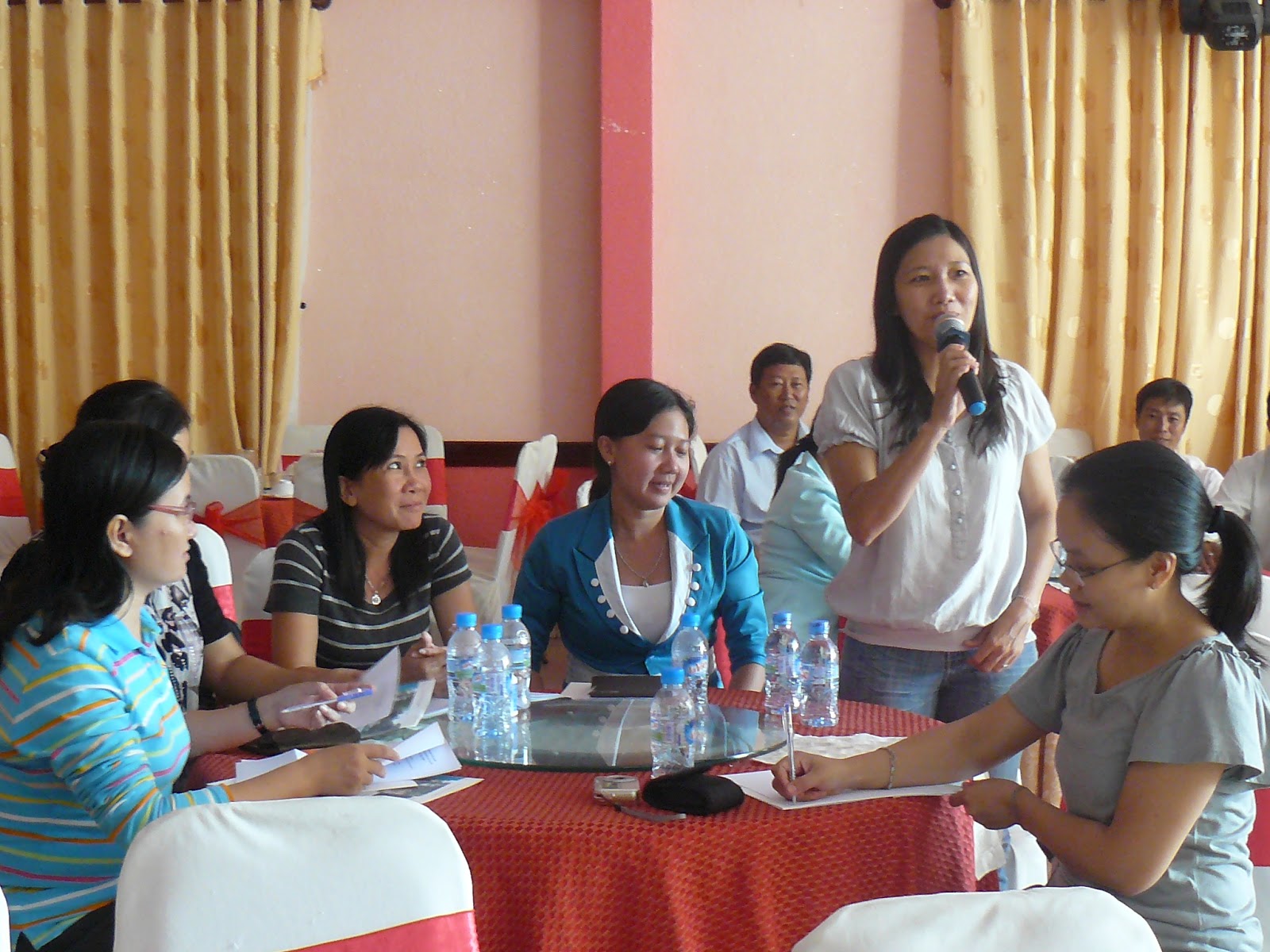
The training was conducted as a dynamic workshop with a participatory approach including games, group work, presentations and a plenary discussion. Workshop regulations required active participation; all ideas to be listened-to and respected; no personal criticism and mobile phones to be in silent mode.
Gender training course notes

Friday, June 29, 2012

ICAM training, June 2012

28-29.06.2012
On June 28th and 29th, 2012, the Department of Agriculture and Rural Development (DARD) of Soc Trang and the Vietnamese-German technical cooperation project ‘Management of Natural Resources in the Coastal Zone of Soc Trang Province’ organised a training on Integrated Coastal Area Management (ICAM) in Soc Trang City for local authorities and relevant stakeholders related to the management of coastal resources and the environment.
The aim of this ICAM training course was to strengthen participants' knowledge and skills for the implementation of an ICAM programme and to provide a better understanding on how the ICAM framework has become a useful methodology to promote sustainable development of coastal areas.
The training was conducted by three national experts, Dr. Nguyen Minh Son,  Mr. Le Van Thu and Mrs. Pham Thi Chin, who have special knowledge of ICAM implementation in Vietnam and are familiar with PEMSEA’s ICM framework and process, as the project wants to cooperate closely with PEMSEA (Partnerships in Environmental Management for the Seas of East Asia) and VASI (Vietnam Administration of Sea and Islands) for the up-scaling of ICAM in Vietnam.
The training course emphasised the need for ICAM, the benefits of an integrated approach to management, the basic principles behind the ICAM practice, the framework, processes and good practices of ICAM implementation. Case studies and lessons learned from the ICAM implementation in Da Nang, Thua Thien Hue and in the region were also presented and discussed. Source: Our Project Website
ICAM Training June 2012 - Course notes